
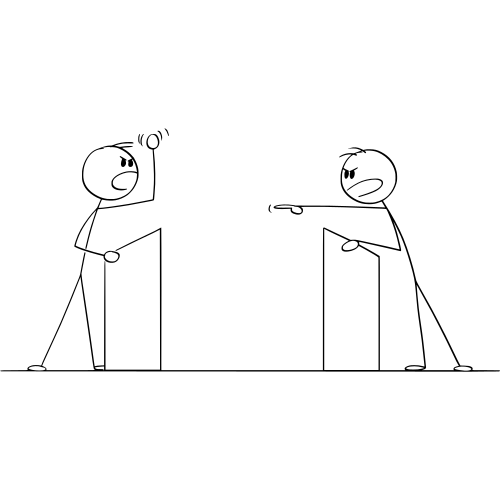
The grand halls of the University of Wit & Cheek recently played host to what can only be described as an extraordinary academic showdown regarding the limitations of diagnostic frameworks in therapeutic planning. The debate, held in the prestigious Ambiguity Auditorium, brought together three distinguished voices in the field of mental health diagnostics.
The Opening Salvos
Professor Sarcasm Dryly opened the proceedings with characteristic dry wit: “How wonderfully convenient it must be to reduce the complexity of human experience to a series of alphanumeric codes. Perhaps next we’ll develop an app that automatically diagnoses patients based on their emoji usage.”
The professor’s opening statement highlighted how the DSM-5 and ICD-11 systems oversimplify mental disorders by categorizing them into discrete entities, leading to potential misdiagnosis. “The beauty of human suffering,” Professor Dryly continued, “is that it refuses to be neatly categorized into your little boxes.”
The Stubborn Defense
Dr. Stubborn MacStubborn, clutching his well-worn DSM-5, countered with unwavering conviction: “These diagnostic frameworks provide structure and consistency. Without them, we might as well be reading tea leaves!” However, even his steadfast defense couldn’t ignore the fact that both systems primarily rely on observable symptoms and subjective reports for diagnosis, introducing variability and inconsistency among clinicians.
The Synchronicity Perspective
Professor Synchronicity Sage offered a more nuanced view: “While we’re busy forcing square pegs into round diagnostic holes, we’re missing the meaningful coincidences and patterns that could inform our therapeutic approach.” The professor referenced Jung’s work on synchronicity and its potential therapeutic applications, suggesting that rigid diagnostic frameworks might blind therapists to important therapeutic opportunities.
The Mysterious Moderator
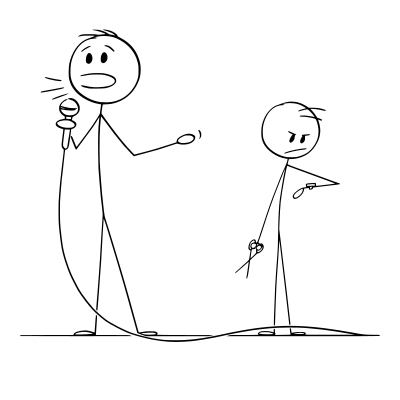
Agent Phil in the blank, maintaining an air of enigmatic authority, occasionally interjected with redacted statements: “The evidence suggests [REDACTED] that the current diagnostic [blank] model has significant limitations [REDACTED] particularly in capturing the [blank blank blank] spectrum of human experience.”
The Core Arguments
The debate revealed several critical limitations of working within DSM-5 and ICD-11 frameworks:
1. Cultural Insensitivity: The diagnostic models emerge predominantly from Western perspectives, raising concerns about their global applicability.
2. Lack of Biological Markers: Unlike physical health conditions, psychiatric diagnoses heavily rely on subjective observations rather than definitive biological markers.
3. Limited Flexibility: The current diagnostic manuals struggle to incorporate rapidly evolving research findings, potentially hampering the development of more precise and personalized treatment approaches.
The Resolution
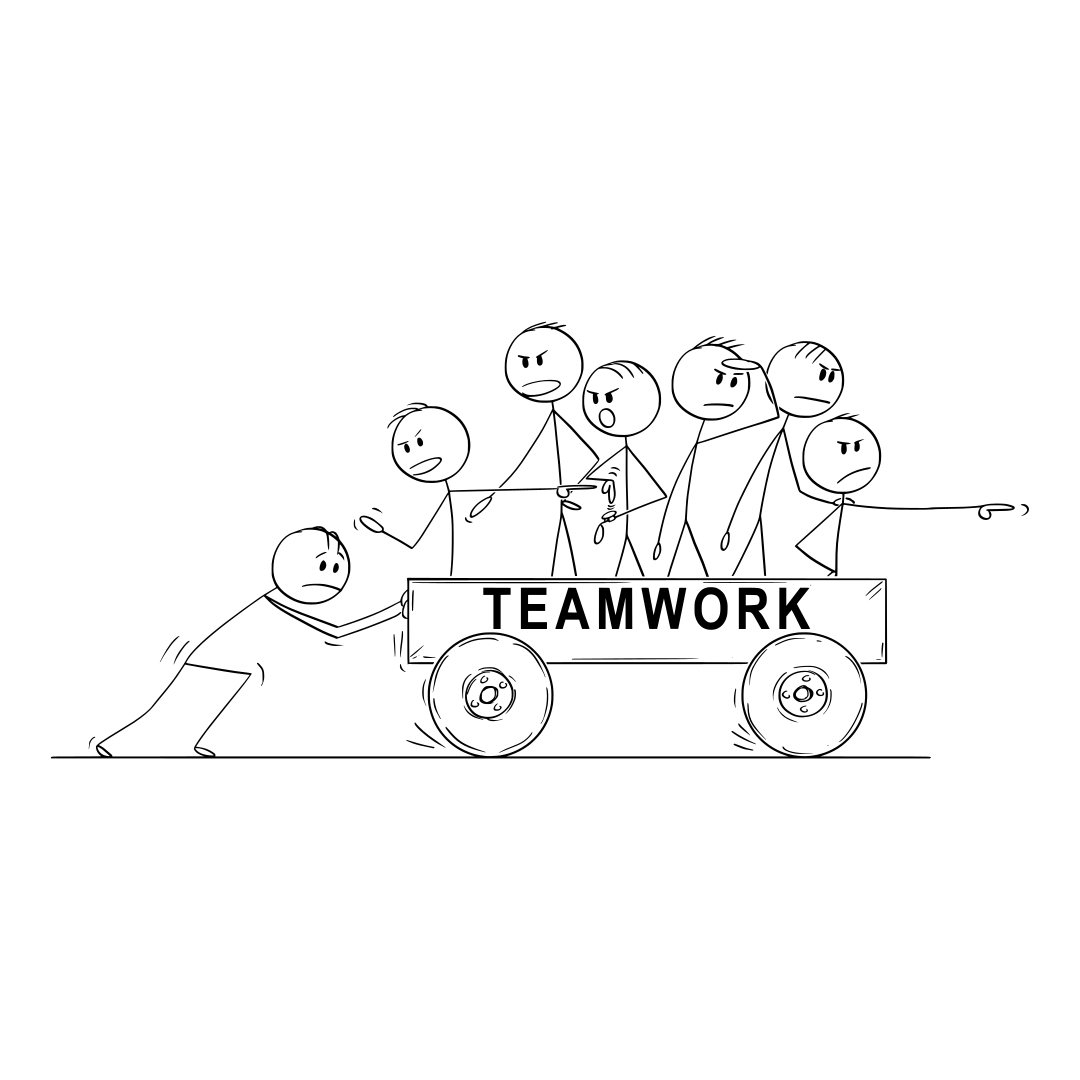
As the debate concluded, Agent Phil in the blank summarized the key findings: “While diagnostic frameworks provide a common language [Blank] [REDACTED], [Blankity Blank], their limitations suggest the need for a more flexible, culturally sensitive approach to therapeutic planning.” Clearly [REDACTED], [Blank], teamwork and [Blankity Blank] as well as [beeeeeep] are an absolute must. And furthermore [Blankity Blank], [Blank], [REDACTED],[REDACTED].[REDACTED] and [Blank]. Thank you all for the clear and well argued debate on this delicate subject.
Professor Sarcasm Dryly couldn’t resist a final quip: “Perhaps we should create a new diagnostic code for ‘excessive reliance on diagnostic codes.'”
The debate highlighted that while DSM-5 and ICD-11 serve important functions in providing a common language for mental health professionals, their rigid frameworks can limit therapeutic effectiveness and fail to capture the full complexity of human experience.
References
Smith, Stephanie Joy (2024). “Beyond Diagnostic Frameworks.” Smith Clinic, Chaos & Shoes
References
1. First, M.B., et al. (2024). “Major Diagnostic Differences Between DSM-5 and ICD-11”
2. Clark, L.A., et al. (2024). “Three Approaches to Understanding Mental Disorders”
4. Beitman, B. (2024). “Coincidence Studies in Psychotherapy”
5. Breaking the Mould: Limitations of Current Psychiatric Diagnosis Model
6. First, M.B., et al. (2024). “Innovations and Changes in ICD-11 Classification”
https://www.psychiatrictimes.com/view/major-diagnostic-differences-between-dsm-5-and-icd-11
https://pmc.ncbi.nlm.nih.gov/articles/PMC7801846
https://pmc.ncbi.nlm.nih.gov/articles/PMC11184174
https://www.theepochtimes.com/article/how-we-could-use-coincidences-in-psychotherapy-1715647
https://www.scielo.br/j/rbp/a/SdY8VmVy56YTY3k6Mp4bqTJ


By Stephanie with AI & OI
from the University of Wit & Cheek.
Notice Title
Want to read more about Agent Phil in the blank? Go to his grocery list or is it the latest research?
