

All about the Brain and Neuropsychology| Blog series
Neuroplasticity and Memory Enhancement: The Brain’s Incredible Ability to Adapt and Change
Understanding Neuroplasticity
Neuroplasticity represents one of the most remarkable discoveries in modern neuroscience. Until the 1990s, scientists believed the adult brain was essentially fixed and unchangeable after critical developmental periods. This “neuroplasticity dogma” suggested that adults possessed a finite number of neurons that could not be replaced when lost.
However, groundbreaking research has revolutionized our understanding. The adult brain demonstrates extraordinary plasticity – the ability to reorganize and rewire itself throughout the entire lifespan. This includes multiple mechanisms: structural changes in neuron morphology, functional reorganization of brain networks, synaptic plasticity through strengthened connections, and remarkably, neurogenesis – the generation of approximately 700 new neurons daily in the hippocampus.
Memory Enhancement Through Evidence-Based Techniques
Research has identified several highly effective memory enhancement strategies that healthy adults can implement immediately:
Spaced Repetition emerges as the most powerful technique for long-term retention. This involves reviewing information at strategically increasing intervals, allowing the brain to strengthen memory consolidation during rest periods. Unlike cramming, spaced repetition creates more durable neural pathways by repeatedly reactivating the same memory traces.
Active Recall proves superior to passive review methods. Rather than simply rereading material, testing yourself without looking at answers forces the brain to strengthen retrieval pathways. This “desirable difficulty” creates more robust memories through the struggle of remembering.
The Memory Palace Technique (Method of Loci) represents an ancient but scientifically validated approach. This method involves linking information to familiar spatial locations in your mind, leveraging the brain’s exceptional spatial memory systems. Memory champions routinely use this technique to memorize vast amounts of information.
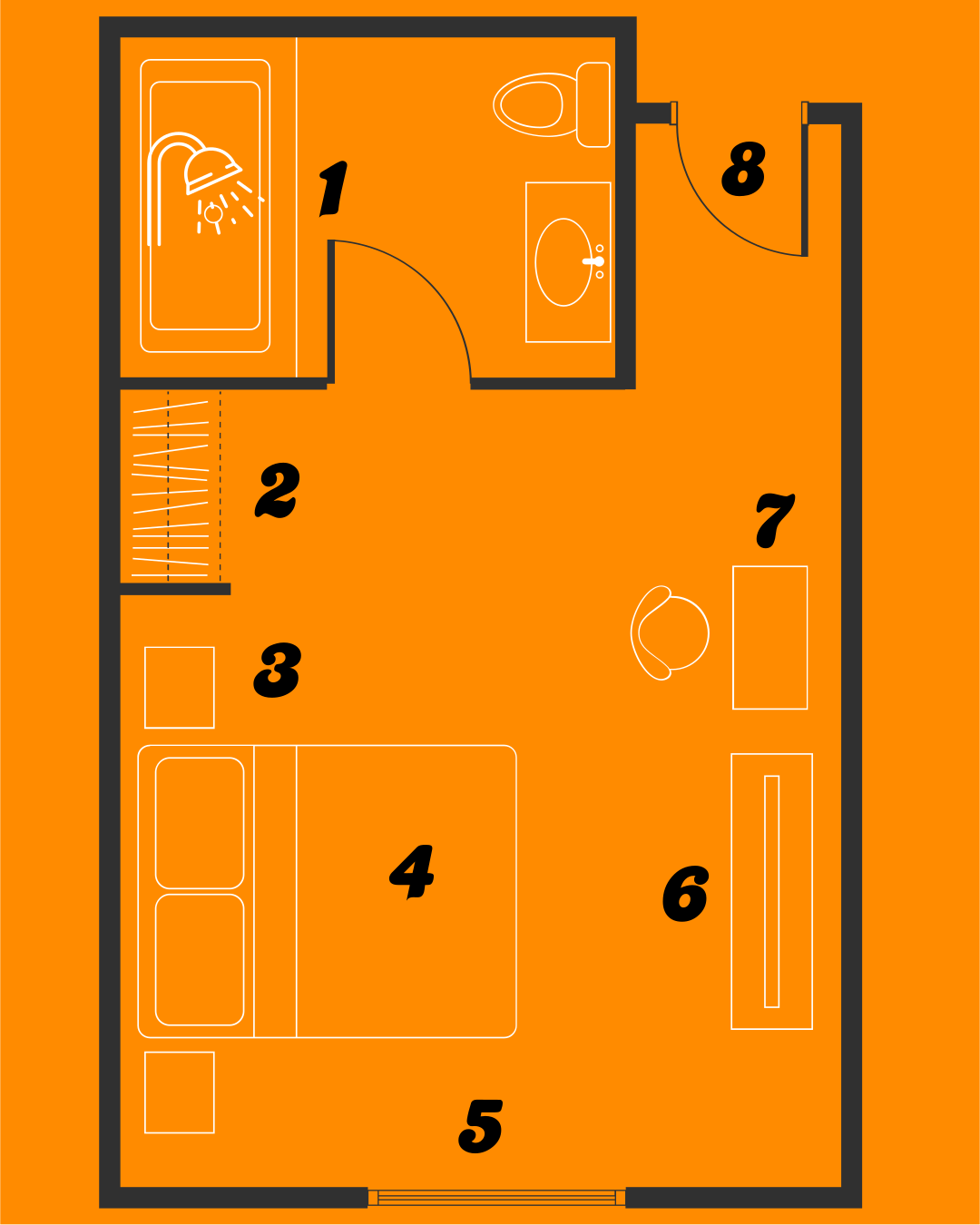
Diagram of the memory palace (Method of Loci) using a bedroom room layout to improve memory retention by mentally associating information with familiar objects.
Physical Exercise: The Brain’s Best Medicine
The evidence for exercise as a neuroplasticity enhancer is overwhelming. Aerobic exercise specifically increases hippocampus size by approximately 2% within just six months. This brain region is crucial for memory formation and spatial navigation.
Exercise triggers a cascade of beneficial neurochemical changes. Brain-Derived Neurotrophic Factor (BDNF) increases by up to 200% following regular exercise.
This is remarkably achievable: 30 minutes of moderate aerobic exercise, three times per week produces measurable cognitive benefits. Effects include improved memory, attention, processing speed, and executive function. Even a single 10-minute exercise session can enhance functional connectivity between the hippocampus and cortical regions.
Our brains performing various exercises and activities symbolizing brain training and cognitive health

Cognitive Training and Mental Exercise
Challenging mental activities promote dendritic branching and new synapse formation. Learning new skills activates multiple brain regions simultaneously, creating widespread neural changes. The key principle is progressive overload – gradually increasing cognitive demands to stimulate continued adaptation.
Cross-training different cognitive domains yields superior results compared to focusing on single abilities. Studies show that older adults who learned multiple new skills simultaneously – such as language, drawing, and music – achieved cognitive performance levels similar to middle-aged adults after just weeks of training.
Research from the landmark ACTIVE study demonstrated that cognitive training benefits persist for up to 10 years following intervention. Participants showed maintained improvements in reasoning and processing speed even a decade later, highlighting the durability of well-designed cognitive training programs.
Check out our Cogmed training program!
Let’s Debunk some Common Myths
🧠 Brain training games are sufficient Kinda of….Partially false. Real-world, challenging activities provide superior benefits.
🧠 You can’t teach an old dog new tricks NOPE and Categorically false. Neuroplasticity continues throughout the lifespan.
🧠 We only use 10% of our brain JUST NO and Completely untrue. Modern neuroimaging shows extensive brain activity.
Hope you enjoyed, see you soon Stephanie

Want to hear about our PODCAST? Listen to Conrad and Valerie talk about how the Brain is a Symphony of Cognition? Let me take you there. or all about neuroplasticity Enjoy!! Stephanie

the Clinical Insights Blog by Stephanie and edited by Michael
With A little AI and OI | @smithclinic.eng

