
In a world where binge-watching has become a competitive sport and streaming services multiply faster than plot twists in a soap opera, the esteemed Professor Sarcasm Dryly from the University of Wit & Cheek’s Department of A Splash of Irony has unveiled his latest research on the ever-pressing question: “What to watch?” This groundbreaking study, which promises to revolutionize our understanding of modern viewing habits – or at least provide a few chuckles along the way – delves into the intricate psychology of content consumption in the age of endless choices.
“Picture, if you will, a world where people spend more time scrolling through options than actually watching anything,” quips Professor Dryly, his eyebrow raised in a manner that suggests he finds the very idea both fascinating and mildly ridiculous.
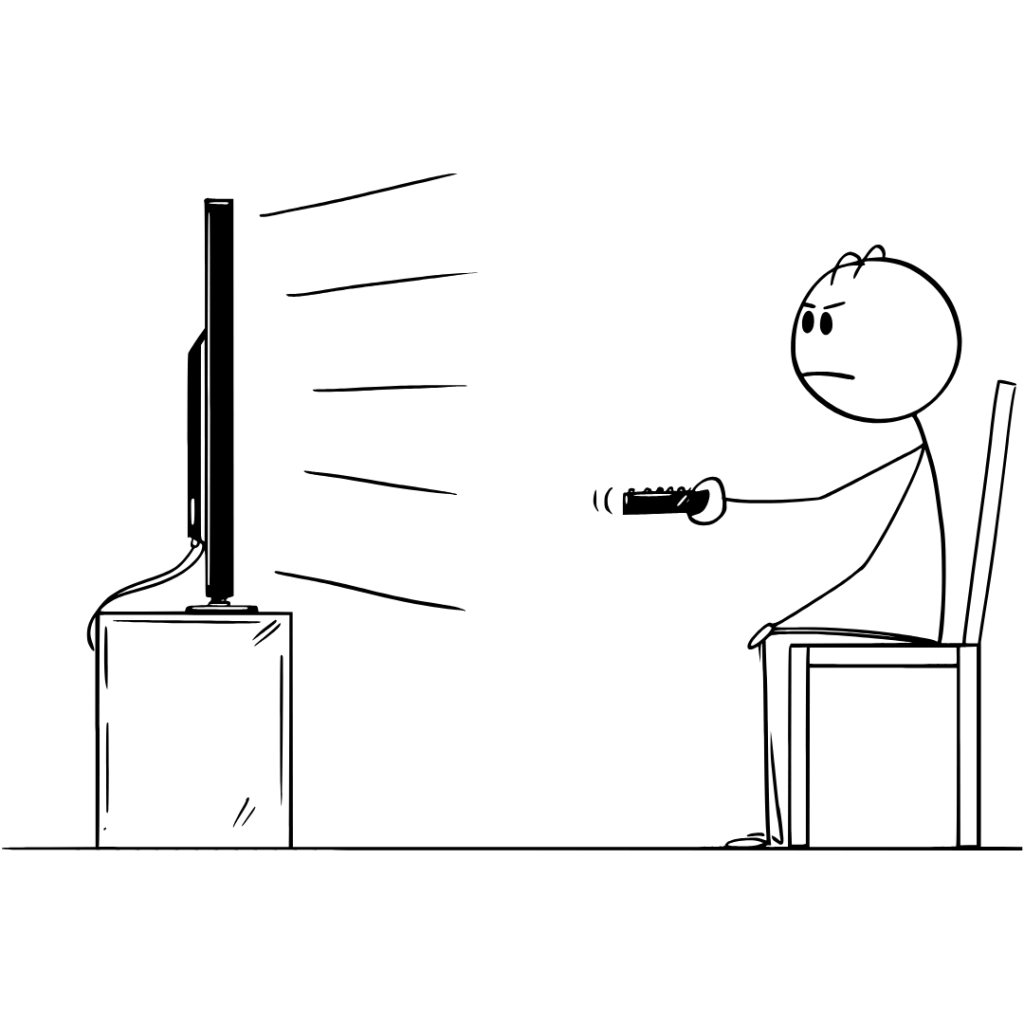
“That’s essentially what we’re dealing with here – a paradox of choice that would make even Buridan’s ass throw in the towel and take up reading instead.”
The professor’s research reveals some startling statistics about our viewing habits. According to his findings, the average person spends approximately 23.8 minutes per day just deciding what to watch. “That’s nearly half an episode of ‘Friends,'” Professor Dryly notes dryly. “One has to wonder if we’re more entertained by the act of choosing than by the content itself.”
But the revelations don’t stop there. The study found that 41% of streaming time is now spent on OTT (Over-The-Top) content, with smart TVs being the preferred device for 35.3% of viewers. “It seems we’ve traded the tyranny of scheduled programming for the despotism of algorithms,” Professor Dryly muses. “At least now we can be indecisive at any time of day or night.”
The research also sheds light on the growing trend of multi-platform viewing. A staggering 99% of U.S. households now subscribe to one or more streaming services, with many juggling multiple subscriptions. “It’s like we’re all plate-spinners in a digital circus,” Professor Dryly remarks. “Except instead of plates, we’re balancing Netflix, Hulu, Amazon Prime, and whatever new service launched while I was explaining this.”
But what does this mean for the future of content consumption? According to Professor Dryly, we’re witnessing the emergence of a new phenomenon he calls “content commitment phobia.” “People are so paralyzed by the fear of missing out on the next big show that they end up watching nothing at all,” he explains. “It’s the televisual equivalent of going to a buffet and starving to death.”
The study also explores the impact of recommendation algorithms on viewing habits. While these algorithms are designed to help viewers discover new content, Professor Dryly’s research suggests they may be creating echo chambers of taste. “It’s like being trapped in a hall of mirrors,” he quips. “Everywhere you look, you see reflections of your own viewing history. Heaven forbid you accidentally watch a documentary and suddenly find your recommendations filled with penguins and world wars.”
However, it’s not all doom and gloom in the world of content consumption. Professor Dryly’s research also highlights some positive trends. For instance, the rise of niche content and international programming has led to a more diverse viewing landscape. “It turns out that people will watch subtitled Norwegian crime dramas if you tell them it’s trendy,” he notes. “Who knew that cultural enrichment could be achieved through peer pressure?”
In conclusion, Professor Sarcasm Dryly’s latest research provides a fascinating – and slightly tongue-in-cheek – look at the complexities of modern viewing habits. As we navigate the ever-expanding sea of content, armed with multiple remotes and subscription passwords, perhaps the most important question isn’t “What to watch?” but rather “Why are we watching at all?”
As the professor himself puts it, with a twinkle in his eye, “In the grand scheme of things, it doesn’t really matter what you watch. Just remember to blink occasionally and maybe, just maybe, consider going outside once in a while. I hear there’s a rather interesting show called ‘reality’ playing out there.”
So the next time you find yourself paralyzed by indecision in front of your smart TV, take heart. You’re not alone in your struggle. And who knows? By the time you finally decide what to watch, it might be time to go to bed anyway.
References
Smith, Stephanie Joy. (2024). “What to Watch: Navigating the Streaming Jungle.” Published at Smith Clinic, edited by Stephanie at Chaos & Shoes.
References
1. Nielsen. (2023). The Gauge: Total TV and Streaming Snapshot.
2. Accedo One. (2024). Top 7 OTT statistics of 2024 you should care about.
3. Statista. (2024). Distribution of total television and video usage in the United States in September 2024, by delivery platform.
4. Forbes. (2024). Top Streaming Statistics In 2024.
5. MNTN. (2024). TV Viewership Statistics & Trends to Watch for in 2024.
6. Smith, Stephanie Joy. (2024). “What to Watch: Navigating the Streaming Jungle.” Published at Smith Clinic, edited by Stephanie at Chaos & Shoes.
https://www.accedo.one/insights-and-news/top-7-ott-statistics-of-2024-you-should-care-about
https://www.statista.com/statistics/1271692/total-tv-video-usage-distribution-by-delivery-platforms
https://www.forbes.com/home-improvement/internet/streaming-stats


By Stephanie with AI & OI
from the University of Wit & Cheek.
