

Yellow September:
Suicide Prevention and Awareness Month
In an earlier post, I wrote about vulnerability factors, but I felt that as this self-harm deserved a full post on it’s own. It’s one of the most significant vulnerability factors I assess for.
Research consistently shows that individuals with a history of self-harm have a dramatically elevated risk for future suicidal behavior. In my clinical experience, self-harm often serves as a “practice” for more lethal methods, gradually eroding the natural barriers that prevent most people from engaging in life-threatening behavior.
Let me be very clear here, this is not a FAD, this isn’t cause so and so made them do it, THIS IS SERIOUS.
Let’s look at some stats around self harm.
Non suicidal self-injury (NSSI), is defined as the deliberate, self-inflicted destruction of body tissue without suicidal intent and for purposes not socially sanctioned, includes behaviors such as cutting, burning, biting and scratching skin.
Note that NSSI is defined as without having suicidal intent.
There is a higher rate of NSSI in young adults and adolescents worldwide. Why is that?
Teens have significantly higher levels of emotion dysregulation, and impairment in their coping mechanisms.
There were also significantly higher levels of symptoms of depression, anxiety, anger, post-traumatic stress and dissociation in community adolescents with prevalent NSSI.
NSSI can indicate suicide in the long term, especially in communities where it is prevalent there is higher amount of suicide ideation.
Please note that there is a differentiation between those who try it one or twice or those who do so repetitively.
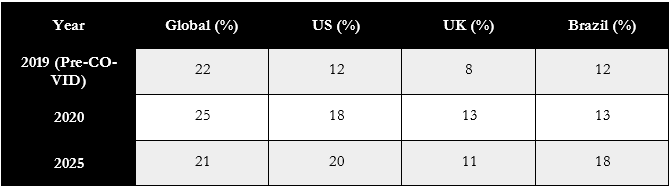
In the table above, there is not good news, rates are decreasing in terms of Global trends, but the USA, UK and Brazil unfortunately are not following this global trend.
What is NISS? SELF INJURY
What can be included in this list? The answer is complex but depending on your theoretical line anything that behaviors that can result in harming oneself. Which includes anything from eating disorders to cutting to suicide to lack of self care, but for now let’s list the following: cutting, scratching, carving, burning their own skin.
The WHY well it’s Complex
Traditionally psychologists have hypothesized that self injury was an (inappropriate) way of expressing feelings that they are unable to article in other ways.
Research in the 1950’s showed a phenomenon described as “pain offset relief”. In other words we almost all have an unpleasant experience to pain but after the pain has subsided there is a brief window of euphoria.
This means that those who have accessed this mechanism through cutting, experiences this life changing euphoria, and this can become addictive, and is therefore a cycle which is so hard to break.
Then Why self-injure?
Great questions and I’ll try to give some answers.
One of them is simply getting on the negative thoughts train such as being bad or defective or unworthy or stupid, these thoughts contribute to the cycle of self injury and self-punishment.
I’m stupid = I’m not worthy of self care = self injury.
Therefore it’s the manifestation of the negative thoughts into negative and destructive behaviours.
One of the more worrying aspects of cutting is it can almost become a game of what I call:
I’m so stupid/bad that I need to inflict pain on myself.
The more pain I self-inflict, the more I confirm my belief that I’m stupid/bad.
Another reason is what I term as anti-dissociation, whereby an individual is trying to feel something real.
Another reason is the ineffective social networks and interactions, which reaffirm, feelings of isolation and deep social anxiety.
And there is an enormous amount of research that back up the hypothesis that self harm is a desperate attempt to communicate deep anguish because the individual is not able to find the words or ways to express their feelings adequately.
If self-harm is often an ineffective attempt to cope with emotional distress and relieve psychological pain, what would actually help?
Learning to developing alternative emotion regulation skills, through addressing these maladaptive self-beliefs, using imagery-based therapies, as well as investing in DBT (Dialectical Behavior Therapy), CBT (Cognitive Behavioral Therapy) and Neuro-rehabilitation to specifically target trauma, rumination, and self worth.
Creating effective coping strategies.

the Clinical Insights Blog by Stephanie and edited by Michael
With A little AI and OI | @smithclinic.eng

