

The ADHD blog series
Due to popular demand we have added a TLTR summary and key points.
Summary TLTR
ADHD, often associated with challenges, paradoxically fosters humor and creativity. Research shows humor can be a coping mechanism, resilience builder, and tool for reframing experiences. While humor-based interventions show promise, further research is needed to understand their long-term effects and cultural influences.
Key Points
ADHD and Humor Connection: Individuals with ADHD often exhibit humor and creativity as coping mechanisms, potentially due to their unique cognitive and behavioral traits.
Neuropsychological Basis: Research suggests that a present-hedonistic time perspective, common in individuals with ADHD, might contribute to their ability to find humor in immediate situations.
Humor as a Coping Mechanism: Humor is identified as a strength and coping mechanism for individuals with ADHD, contributing to their resilience and success.
Humor and Resilience: Adaptive humor styles, particularly self-enhancing humor, are associated with higher levels of resilience and psychological well-being in individuals with ADHD.
Reframing ADHD Symptoms: Individuals with ADHD can reframe their experiences through humor, turning perceived weaknesses into strengths, such as reframing distractibility as curiosity.
Social Benefits of Humor: Humor can be a valuable social tool for individuals with ADHD, helping them navigate social situations and form friendships.
Humor Styles and Well-being: Adaptive humor styles (self-enhancing and affiliative) are linked to positive outcomes, while maladaptive styles (aggressive and self-defeating) may negatively impact well-being.
Therapeutic Applications of Humor: Humor-based interventions are gaining recognition in ADHD treatment for their potential to reduce stress, enhance cognitive flexibility, and improve overall quality of life.
Complementary Approach: While humor shows promise, it should complement, not replace, evidence-based treatments like pharmacological interventions and behavioral therapies.
ADHD and Entrepreneurship: Studies show a link between ADHD symptoms and entrepreneurial traits, such as thinking outside the box and taking risks.
Humor as a Tool: Humor can aid creative problem-solving, build rapport, and contribute to resilience in individuals with ADHD.
Future Research Directions: Further research is needed to understand how to cultivate adaptive humor styles, the long-term effects of humor-based interventions, and the influence of cultural factors.
ADHD and Humor: Fostering Resilience and Self-Acceptance
In the realm of neurodevelopmental disorders, Attention Deficit Hyperactivity Disorder (ADHD) stands out not only for its challenges but also for the unique perspectives and abilities it can foster. Among these, the capacity for humor and creativity has emerged as a powerful tool for individuals navigating the complexities of ADHD. This article delves into the intersection of ADHD, humor, and resilience, examining how laughter can serve as a therapeutic mechanism for reframing experiences and fostering self-acceptance.
The relationship between ADHD and humor is multifaceted, rooted in the cognitive and behavioral characteristics associated with the disorder. Dr. Edward Hallowell, a leading expert in ADHD research and treatment, posits that the very traits often viewed as problematic in ADHD can be wellsprings of creativity and humor. “Creativity begins in a mess,” Hallowell notes. “It begins in a swirl, in a mudpie, in a stream of words slapped on a page”. This perspective illuminates how the seemingly chaotic nature of ADHD can lead to unexpected bursts of creativity and humorous insights.
Recent research has begun to elucidate the neuropsychological underpinnings of this connection. A study by Weissenberger et al. (2020) found that adults with ADHD symptoms were more likely to exhibit a present hedonistic time perspective, which may contribute to their ability to find humor in immediate situations. This orientation towards the present moment, while potentially challenging in some contexts, can enhance one’s capacity for spontaneous humor and creative problem-solving.
The use of humor as a coping mechanism in ADHD is not merely anecdotal but is supported by empirical evidence. A qualitative study by Sedgwick et al. (2019) identified humor as one of the strengths reported by high-functioning adults with ADHD.
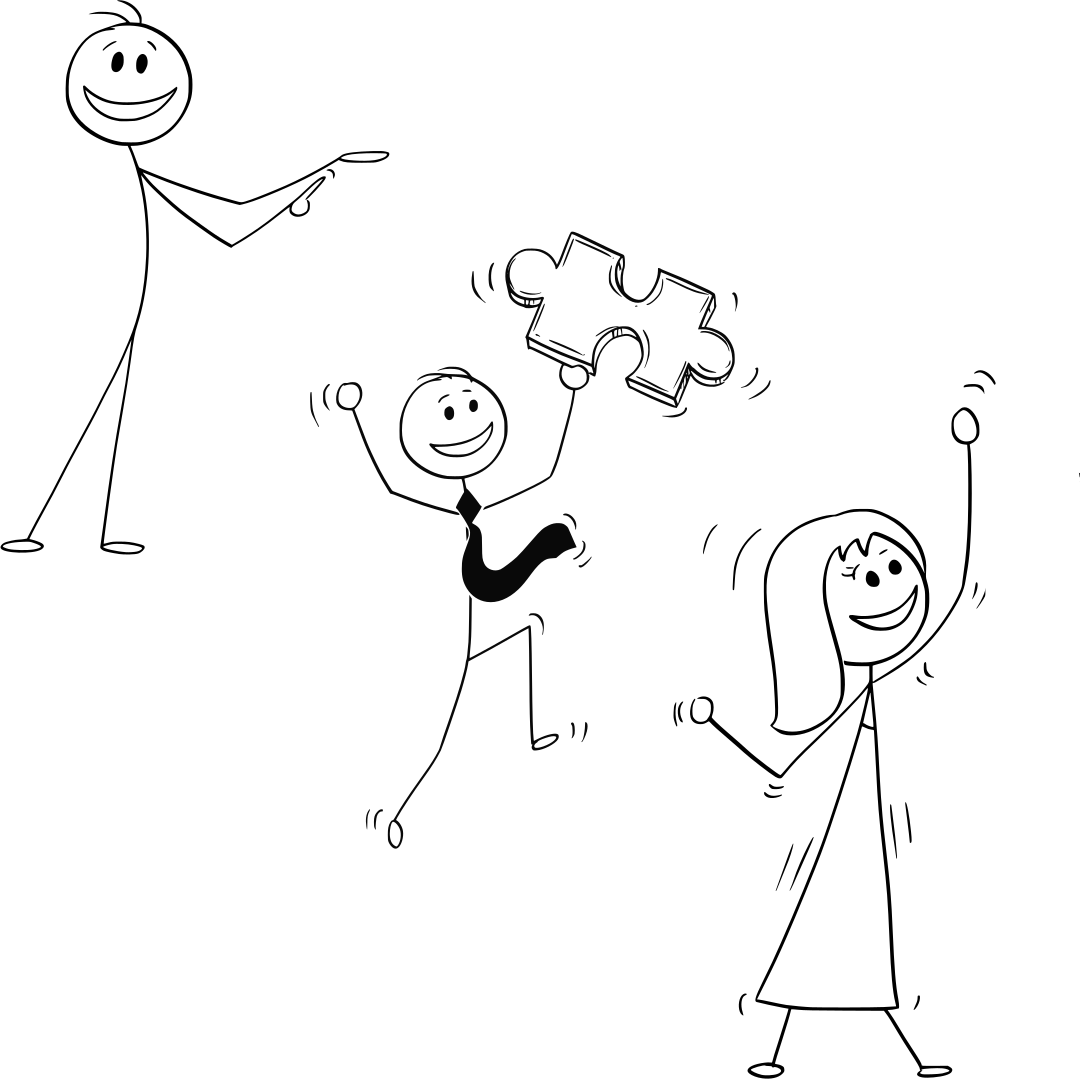
This finding suggests that the ability to find humor in one’s experiences may be a key factor in developing resilience and achieving success despite the challenges associated with ADHD.
Moreover, the relationship between humor and resilience extends beyond the ADHD population. A study by Kuiper et al. (2009) found that adaptive humor styles, particularly self-enhancing humor, were associated with higher levels of resilience and psychological well-being. For individuals with ADHD, cultivating these adaptive humor styles may serve as a protective factor, enhancing their ability to cope with the daily challenges associated with the disorder.
The concept of “mirror traits,” introduced by Dr. Hallowell, provides a framework for understanding how individuals with ADHD can reframe their experiences through humor. Hallowell encourages individuals to recognize the positive sides of ADHD symptoms, effectively turning perceived weaknesses into strengths. For instance, distractibility can be reframed as curiosity, and impulsivity as spontaneity. By adopting this perspective, individuals with ADHD can use humor to celebrate their unique cognitive style rather than viewing it solely as a deficit.
This reframing process is not merely a cognitive exercise but can have tangible effects on self-esteem and social functioning. Research by Dvorsky and Langberg (2016) has shown that positive self-perceptions can contribute to resilient functioning in children with ADHD. By using humor to reframe their experiences, individuals with ADHD may be able to cultivate more positive self-perceptions, thereby enhancing their resilience and overall well-being.
The social dimension of humor in ADHD is particularly noteworthy. Many individuals with ADHD report a keen sense of humor as one of their strengths, which can serve as a valuable social tool. As noted in a study by Cameron et al. (2010), humor can be an important mechanism for navigating social situations and forming friendships, particularly for individuals who may struggle with traditional social skills. For those with ADHD, the ability to make others laugh can be a powerful means of connection and social integration.
However, it is crucial to distinguish between adaptive and maladaptive forms of humor. While self-enhancing and affiliative humor styles are associated with positive outcomes, aggressive and self-defeating humor may have detrimental effects on well-being. A study by Fox et al. (2016) identified distinct humor profiles among adolescents, with those using predominantly adaptive humor styles reporting higher self-esteem and lower depressive symptoms. For individuals with ADHD, cultivating these adaptive humor styles may be particularly beneficial in managing the emotional and social challenges associated with the disorder.
The potential therapeutic applications of humor in ADHD treatment are gaining recognition. Some clinicians are incorporating humor-based interventions into their treatment protocols, recognizing the power of laughter to reduce stress, enhance cognitive flexibility, and improve overall quality of life. Dr. Hallowell advocates for a treatment approach that emphasizes the positive aspects of ADHD, including the capacity for humor and creativity. He encourages individuals to “surround yourself with laughter” as a means of maintaining perspective and fostering resilience.
While the benefits of humor in ADHD are becoming increasingly apparent, it is important to note that this approach should complement, not replace, evidence-based treatments. Pharmacological interventions and behavioral therapies remain crucial components of ADHD management. However, integrating humor-based strategies into comprehensive treatment plans may enhance their effectiveness and improve patient outcomes.
The intersection of ADHD and entrepreneurship provides another lens through which to view the potential benefits of humor and creativity. Studies have found associations between ADHD symptoms and entrepreneurial intentions and actions. The ability to think outside the box, take risks, and find novel solutions to problems—traits often associated with ADHD—can be valuable assets in the business world. Humor, in this context, can serve as a tool for creative problem-solving and building rapport with colleagues and clients.
As research in this area continues to evolve, several questions remain. How can adaptive humor styles be effectively cultivated in individuals with ADHD? What are the long-term outcomes of humor-based interventions in ADHD treatment? How do cultural factors influence the relationship between ADHD, humor, and resilience? These questions represent fertile ground for future research, potentially leading to more nuanced and effective approaches to ADHD management.
In conclusion, the relationship between ADHD, humor, and resilience represents a promising area of study with significant implications for clinical practice and personal well-being. By reframing the challenges of ADHD through humor, individuals can cultivate resilience, enhance self-acceptance, and potentially unlock new avenues for personal and professional success. As one humorous quote reminds us, “ADHD: Where ‘Ooh, shiny!’ is a lifestyle”. This perspective encapsulates the potential for individuals with ADHD to embrace their unique cognitive style, finding joy and creativity in the very traits that may have once been viewed as limitations.
The therapeutic power of humor in ADHD lies not in denying the real challenges associated with the disorder, but in providing a tool for navigating those challenges with grace, creativity, and resilience. As research in this area continues to unfold, it may well reveal that laughter is indeed one of the most potent medicines for the ADHD brain.
References
1. Weissenberger, S., Klicperova-Baker, M., Zimbardo, P., Schonova, K., Akotia, D., Kostal, J., Goetz, M., Raboch, J., & Ptacek, R. (2020). ADHD Symptoms in Adults and Time Perspectives – Findings From a Czech National Sample. Frontiers in Psychology, 11, 950.
2. Kuiper, N. A., Grimshaw, M., Leite, C., & Kirsh, G. (2004). Humor is not always the best medicine: Specific components of sense of humor and psychological well-being. Humor: International Journal of Humor Research, 17(1-2), 135-168.
3. Sedgwick, J. A., Merwood, A., & Asherson, P. (2019). The positive aspects of attention deficit hyperactivity disorder: a qualitative investigation of successful adults with ADHD. ADHD Attention Deficit and Hyperactivity Disorders, 11(3), 241-253.
4. Cameron, E. L., Fox, J. D., Anderson, M. S., & Cameron, C. A. (2010). Resilient youths use humor to enhance socioemotional functioning during a day in the life. Journal of Adolescent Research, 25(5), 716-742.
5. Dvorsky, M. R., & Langberg, J. M. (2016). A Review of Factors that Promote Resilience in Youth with ADHD and ADHD Symptoms. Clinical Child and Family Psychology Review, 19(4), 368-391.
6. Hatak, I., Chang, M., Harms, R., & Wiklund, J. (2021). ADHD symptoms, entrepreneurial passion, and entrepreneurial performance. Small Business Economics, 57(4), 1693-1713.
7. Hallowell, E. M. (2020). Changing Your Perspective on ADHD. Dr. Hallowell. https://drhallowell.com/2020/01/29/changing-your-perspective-on-adhd/
8. Fox, J. A., Leung, N., & Boden, Z. (2016). Humour styles and eating psychopathology in patients with a diagnosed eating disorder and a non-clinical control group. European Eating Disorders Review, 24(4), 338-346.
9. ADHD Flow State. (2024). 50 ADHD Quotes From Experts, Authors and Entrepreneurs. https://www.adhdflowstate.com/best-adhd-quotes/
[PDF] A Case Study of Mental Health Influencer Dr. Ned Hallowell http://jpmm.um.edu.my/index.php/JPMM/article/download/47385/17456/151479
[PDF] Humour, Resilience, Happiness and the Self, a Typology approach. https://esource.dbs.ie/server/api/core/bitstreams/ba9e5ac1-4ba3-4a9d-bb6d-b4f546674a49/content
ADHD and Creativity: `You’re Not ADD (Part 3): You’re Artistic` https://www.additudemag.com/youre-not-add-part-3-youre-artistic/
What are the benefits of ADHD? – MedicalNewsToday https://www.medicalnewstoday.com/articles/adhd-benefits
Strengths and Resilience of Children With and Without ADHD – PMC https://pmc.ncbi.nlm.nih.gov/articles/PMC10291108/
Creativity in ADHD: Goal-Directed Motivation and Domain Specificity https://pmc.ncbi.nlm.nih.gov/articles/PMC7543022/
Changing Your Perspective on ADHD – Dr. Hallowell https://drhallowell.com/2020/01/29/changing-your-perspective-on-adhd/
Humor and resilience: relationships with happiness in young adults https://www.degruyter.com/document/doi/10.1515/humor-2021-0079/html?lang=de
50 ADHD Quotes From Experts, Authors and Entrepreneurs https://www.adhdflowstate.com/best-adhd-quotes/
Silver linings of ADHD: a thematic analysis of adults’ positive … https://pmc.ncbi.nlm.nih.gov/articles/PMC10551976/
Read more about laughter and ADHD
Read in more detail about laughter and ADHD Clinical insights
Read more about humorous Challenges
Read more about Humor and ADHD ( Satire)

The ADHDers Blog Series by Stephanie An ADHDers herself and parent to ADHDERS as well.
With A little AI and OI @smithclinic.eng

