

The ADHD blog series
Due to popular demand a shorter version and a TLTR
TLTR
The article explores the phenomenon of hyperfocus in Attention Deficit Hyperactivity Disorder (ADHD), challenging the traditional view of ADHD as solely an attention deficit disorder. Key points include:
Prevalence: ADHD diagnoses are increasing, with 11% of U.S. children aged 3-17 diagnosed, and a global adult ADHD prevalence of 3.1%.
Hyperfocus definition: An intense state of concentration where individuals with ADHD become deeply engrossed in tasks or activities of interest.
Neurological basis: Recent studies reveal atypical brain wiring in ADHD, with increased connectivity between deep brain structures and the frontal cortex. This may explain the hyperfocus phenomenon.
Dopamine connection: Dr. Russell Barkley suggests hyperfocus may be related to low dopamine levels in the frontal lobes.
Assessment tools: Researchers have developed specialized tools like the 12-item dispositional adult hyperfocus questionnaire (AHQ-D) to quantify hyperfocus.
Challenges and benefits: While hyperfocus can lead to time management issues, it can also be advantageous in certain professional and creative pursuits.
Treatment implications: Current ADHD treatments may not specifically address hyperfocus, highlighting a need for further research.
Executive functions: A study found that difficulties in executive functions partially explained the higher frequency of hyperfocus among university students with more severe ADHD symptoms.
The article concludes by emphasizing the need for a more nuanced understanding of ADHD that includes hyperfocus, potentially leading to more effective and personalized treatment approaches and greater acceptance of neurodevelopmental differences.

Clinical Insights Blog Series
ADHD and Hyperfocus: Exploring the Neurological Underpinnings
Attention Deficit Hyperactivity Disorder (ADHD) has long been characterized by symptoms of inattention, hyperactivity, and impulsivity. However, a seemingly paradoxical aspect of this neurodevelopmental disorder has garnered increasing attention from researchers and clinicians alike: the phenomenon of hyperfocus. This intense state of concentration, where individuals become deeply engrossed in tasks or activities of interest, challenges the traditional understanding of ADHD as solely a disorder of attention deficit.
The prevalence of ADHD has been steadily increasing, with recent data from the Centers for Disease Control and Prevention indicating that approximately 11% of children in the United States between the ages of 3 and 17 have been diagnosed with the disorder. This represents a significant rise from previous years, with 7.1 million children and adolescents diagnosed in 2022, up from 6.1 million in 2016. The recognition of ADHD in adults has also gained traction, with a comprehensive meta-analysis published in November 2024 estimating the global prevalence of adult ADHD at 3.1%.
As our understanding of ADHD evolves, so too does the language we use to describe it. The term “attention deficit” has come under scrutiny, with many experts arguing that it misrepresents the true nature of the disorder. Dr. Edward Hallowell, a leading expert in ADHD research and treatment, asserts, “ADHD is not a deficit of attention but an abundance of attention, a wandering of attention, and the problem is to regulate it. People with ADD can pay super attention, but when they’re not interested their mind goes somewhere else”.
This dysregulation of attention is at the heart of the hyperfocus phenomenon. Hyperfocus refers to a state of intense and prolonged focus on a single subject or activity, often to the exclusion of all else. For individuals with ADHD, this can manifest as an ability to concentrate deeply on tasks they find interesting or engaging, sometimes for hours at a time. This state of hyperfocus is characterized by a heightened level of cognitive engagement and a diminished awareness of the surrounding environment.
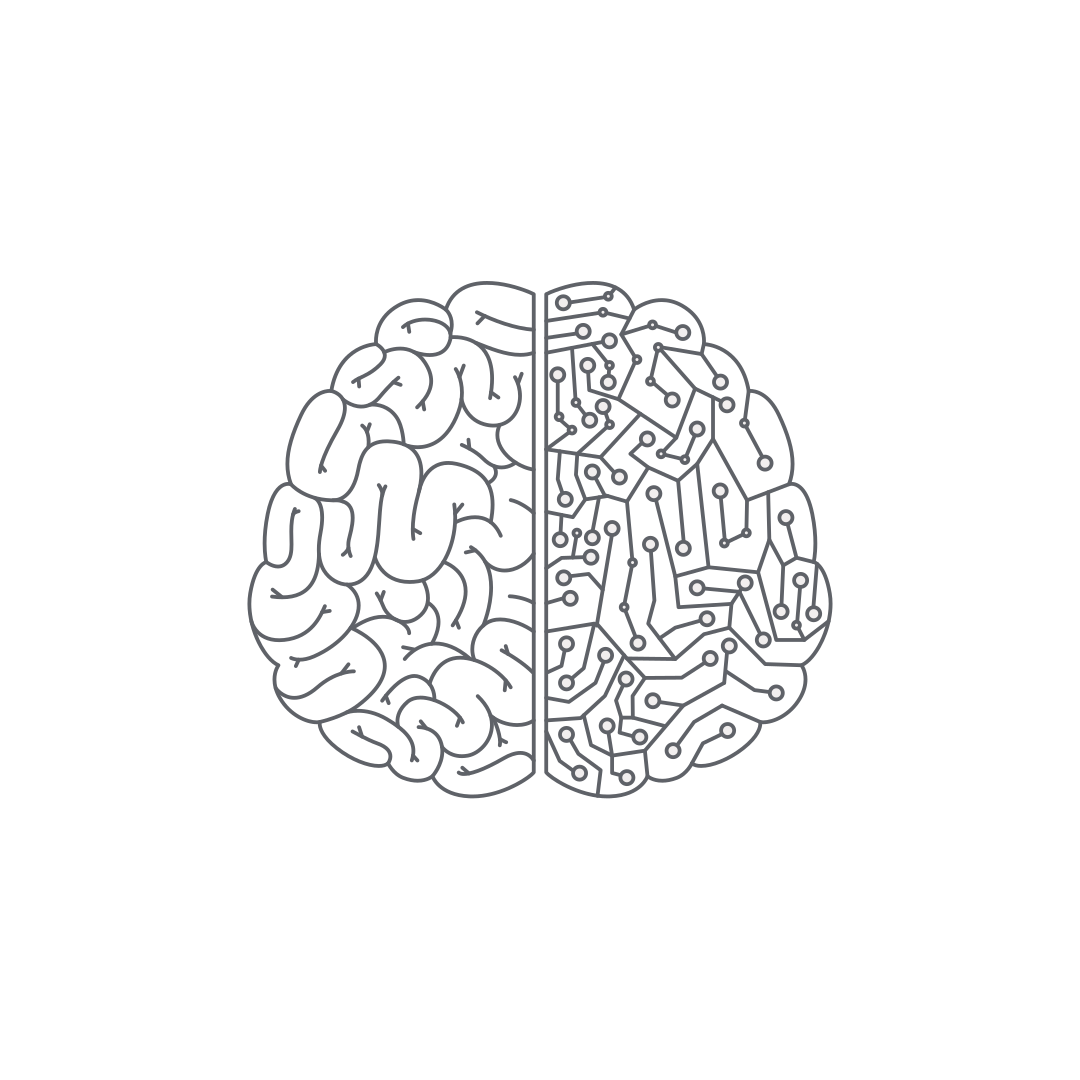
The neurological underpinnings of hyperfocus in ADHD are complex and not yet fully understood.
However, recent research has shed light on some of the mechanisms at play. A study published in the American Journal of Psychiatry in March 2024 revealed atypical brain wiring in children with ADHD. The research, conducted by the National Institutes of Health, found unusual connections between the brain’s frontal cortex and deeper centers responsible for information processing. Specifically, increased connectivity was observed between deep brain structures such as the caudate, putamen, and nucleus accumbens—areas associated with learning, movement, and reward—and regions of the frontal cortex involved in attention regulation and behavioral control.
This increased connectivity may help explain the phenomenon of hyperfocus. Dr. Russell Barkley, a leading ADHD researcher, suggests that the ability to hyperfocus may be related to abnormally low levels of dopamine in the brain’s frontal lobes. He explains, “Children and adults with ADHD have difficulty shifting attention from one thing to another. If they’re doing something they enjoy or find psychologically rewarding, they’ll tend to persist in this behavior after others would normally move on to other things. The brains of people with ADHD are drawn to activities that give instant feedback”.
The relationship between ADHD symptoms and hyperfocus experiences was further elucidated in a study published in the journal Frontiers in Psychology in June 2024. The researchers proposed a three-facet conceptualization of effort in ADHD: task-elicited effort, volitionally exerted effort, and the affect associated with engaging in effort. This framework provides a more nuanced understanding of how individuals with ADHD experience and manage cognitive demands, including those associated with hyperfocus.
To quantify and study hyperfocus more systematically, researchers have developed specialized assessment tools. A study published in Nature Scientific Reports in August 2024 validated the 12-item dispositional adult hyperfocus questionnaire (AHQ-D) as a quantitative metric of hyperfocus in adults. The study found that hyperfocus scores were positively correlated with ADHD traits, as measured by the Conners’ Adult ADHD Rating Scale (CAARS). This correlation suggests that hyperfocus may be an integral component of the ADHD experience, rather than an unrelated phenomenon.
While hyperfocus can be a powerful tool when directed towards productive activities, it can also present challenges. Dr. Margaret Sibley, a clinical psychologist and professor at the University of Washington School of Medicine, notes that hyperfocus can lead to difficulties in time management and task completion when individuals become overly engrossed in non-essential activities. This can result in neglected responsibilities and strained relationships, as the individual may struggle to disengage from their focus of interest.
However, many experts argue that hyperfocus should be viewed not just as a deficit or disorder, but as a difference that can be harnessed for positive outcomes. Dr. Hallowell emphasizes the importance of recognizing and nurturing the positive aspects of ADHD. He states, “ADHD is not a disability, it’s a different ability”. This perspective encourages a shift from viewing ADHD solely as a deficit to recognizing it as a unique neurological variation with both challenges and strengths.
The ability to hyperfocus can be particularly advantageous in certain professional and creative pursuits. Many scientists, writers, and artists with ADHD have reported that their ability to focus intensely on their work has contributed significantly to their success. However, the key lies in learning to channel this focus effectively and to develop strategies for managing the potential downsides.
Recent research has also explored the potential benefits of hyperfocus in educational settings. A study published in 2024 by Brown et al. investigated how different instructional methods influenced the mental effort experience in adults with varying levels of ADHD symptomatology. The researchers found that greater degrees of self-reported mental effort were associated with higher levels of ADHD symptomatology, suggesting that individuals with ADHD may be capable of engaging more deeply with educational content when it is presented in a manner that captures their interest.
As our understanding of hyperfocus in ADHD continues to grow, so too do the potential implications for treatment and management strategies. Traditional approaches to ADHD management have often focused on mitigating symptoms of inattention and hyperactivity. However, a more nuanced approach that takes into account the potential benefits of hyperfocus may prove more effective.
A study published in the Lancet Psychiatry in December 2024 evaluated the effectiveness of different treatments for adult ADHD. The research, which analyzed data from over 14,000 adults, found that stimulant medications and certain non-stimulant medications were more effective than placebos in alleviating primary ADHD symptoms over a 12-week period. However, the study did not specifically address the impact of these treatments on hyperfocus, highlighting a potential area for future research.
The role of executive functions in mediating the relationship between ADHD symptoms and hyperfocus experiences has also been a subject of recent investigation. A study published in November 2023 found that difficulties in executive functions partially explained the higher frequency of hyperfocus among university students reporting more severe ADHD symptoms. This finding suggests that interventions targeting executive function skills may have the potential to modulate hyperfocus experiences in individuals with ADHD.
As research in the field of ADHD continues to advance, it is crucial to maintain a holistic perspective that recognizes the full spectrum of experiences that characterize life with the disorder. The hyperfocus phenomenon serves as a powerful reminder of the complexity of ADHD and the need for individualized approaches to treatment and management.
In conclusion, the science of hyperfocus in Attention Deficit Hyperactivity Disorder represents a fascinating area of study that challenges traditional notions of ADHD as solely a disorder of attention deficit. The neurological underpinnings of hyperfocus, characterized by atypical brain connectivity and dopamine dysregulation, offer insights into the unique cognitive processes of individuals with ADHD. While hyperfocus can present challenges in terms of time management and task completion, it also holds the potential to be a significant strength when properly harnessed.
As our understanding of ADHD and hyperfocus continues to evolve, it is essential that clinicians, educators, and individuals with ADHD work together to develop strategies that capitalize on the potential benefits of hyperfocus while mitigating its potential drawbacks. Future research should focus on further elucidating the neurological mechanisms underlying hyperfocus, as well as developing targeted interventions that can help individuals with ADHD leverage this unique aspect of their cognitive profile.
By embracing a more nuanced understanding of ADHD that includes the phenomenon of hyperfocus, we can move towards more effective and personalized approaches to treatment and support. This shift in perspective not only holds the potential to improve outcomes for individuals with ADHD but also challenges societal perceptions of neurodevelopmental differences, fostering greater acceptance and appreciation for cognitive diversity.
References
1. ADD.org. (2024). ADHD Hyperfocus: The Secret Weapon to Unleashing Productivity.
2. PubMed. (2023). The role of executive functions in mediating the relationship between adult ADHD symptoms and hyperfocus experiences.
3. CNN. (2024). Stimulants are more effective than placebos for ADHD, study finds.
4. Frontiers in Psychology. (2024). The experience of effort in ADHD: a scoping review.
5. Child Mind Institute. (2024). Hyperfocus: The Flip Side of ADHD?
6. ADDitude. (2018). New Study Links Hyperfocus and ADHD.
7. ADHD Flow State. (2024). 50 ADHD Quotes From Experts, Authors and Entrepreneurs.
8. SAGE Journals. (2024). A trans-diagnostic investigation of attention, hyper-focus, and quality of life in autism and ADHD.
9. Forbes. (2024). Kids With ADHD Have Atypical Brain Wiring, NIH Study Finds.
10. Nature. (2024). Validation of the dispositional adult hyperfocus questionnaire (AHQ-D).
11. Frontiers in Psychology. (2024). The experience of effort in ADHD: a scoping review.
ADHD Hyperfocus: The Secret Weapon to Unleashing Productivity … https://add.org/adhd-hyperfocus/
The role of executive functions in mediating the relationship … https://pubmed.ncbi.nlm.nih.gov/38039699/
Stimulants are more effective than placebos for ADHD, study finds https://www.cnn.com/2024/12/17/health/adhd-adult-treatments-study-wellness/index.html
[PDF] The experience of effort in ADHD: a scoping review – Frontiers https://www.frontiersin.org/journals/psychology/articles/10.3389/fpsyg.2024.1349440/pdf
Hyperfocus: The Flip Side of ADHD? – Child Mind Institute https://childmind.org/article/hyperfocus-the-flip-side-of-adhd/
New Study Links Hyperfocus and ADHD – ADDitude https://www.additudemag.com/hyperfocus-adhd-study-news/
50 ADHD Quotes From Experts, Authors and Entrepreneurs https://www.adhdflowstate.com/best-adhd-quotes/
A trans-diagnostic investigation of attention, hyper-focus, and … https://journals.sagepub.com/doi/10.1177/27546330241237883
Kids With ADHD Have Atypical Brain Wiring, NIH Study Finds – Forbes https://www.forbes.com/sites/alisonescalante/2024/03/14/new-nih-research-shows-kids-with-adhd-have-atypical-brain-wiring/
Validation of the dispositional adult hyperfocus questionnaire (AHQ-D) https://www.nature.com/articles/s41598-024-70028-y
[EPUB] The experience of effort in ADHD: a scoping review – Frontiers https://www.frontiersin.org/journals/psychology/articles/10.3389/fpsyg.2024.1349440/epub
Hyperfocus symptom and internet addiction in individuals with … https://pmc.ncbi.nlm.nih.gov/articles/PMC10061009/
New Study Links Hyperfocus and ADHD – ADDitude https://www.additudemag.com/hyperfocus-adhd-study-news/
ADHD Hyperfocus: The Phenomenon of Intense Fixation https://www.simplypsychology.org/hyperfocus-in-adhd.html
Hyperfocus: the forgotten frontier of attention – PMC – PubMed Central https://pmc.ncbi.nlm.nih.gov/articles/PMC7851038/
Hyperfocus: The ADHD Superpower – Frontiers for Young Minds https://kids.frontiersin.org/articles/10.3389/frym.2021.625433
The role of executive functions in mediating the relationship … https://pubmed.ncbi.nlm.nih.gov/38039699/
Hyperfocus: The ADHD Phenomenon of Hyper Fixation – ADDitude https://www.additudemag.com/understanding-adhd-hyperfocus/
Validation of the dispositional adult hyperfocus questionnaire (AHQ-D) https://www.nature.com/articles/s41598-024-70028-y
Bringing Hyperfocus into Research Focus https://www.cogneurosociety.org/bringing-hyperfocus-into-research-focus/
A trans-diagnostic investigation of attention, hyper-focus, and … https://journals.sagepub.com/doi/10.1177/27546330241237883
Notice – Just in case you can’t find any of these posts – it’s cause they are being published throughout this month of January 2025. Enjoy
Read more about unexpected benefits of hyper-focus.
Read more about hyper-focus burnout
Read more about a balancing act
Read more about hyper-focus as a superpower
Read more about a personal insight into hyper-focus
Read more about the science behind Hyper-focus
Read more about the Satire behind Hyper-focus

The ADHDers Blog Series by Stephanie An ADHDers herself and parent to ADHDERS as well.
With A little AI and OI @smithclinic.eng

